A table saw sled is one of the smartest upgrades a DIYer can make. Unlike freehand cuts, a sled holds the workpiece steady and slides predictably along the blade, delivering square crosscuts, repeatable angles, and safer handling of short or awkward pieces. Whether someone’s building cabinet doors, ripping boards, or cutting dados, a proper sled transforms the table saw from a workhorse into a precision tool. The best part? A solid sled costs under $100 in materials and can be built in an afternoon using basic hand and power tools. This guide walks through the design, build, and setup needed to create a sled that’ll outlast most commercial alternatives and become a go-to fixture in the shop.
Table of Contents
ToggleWhat Is A Table Saw Sled And Why You Need One
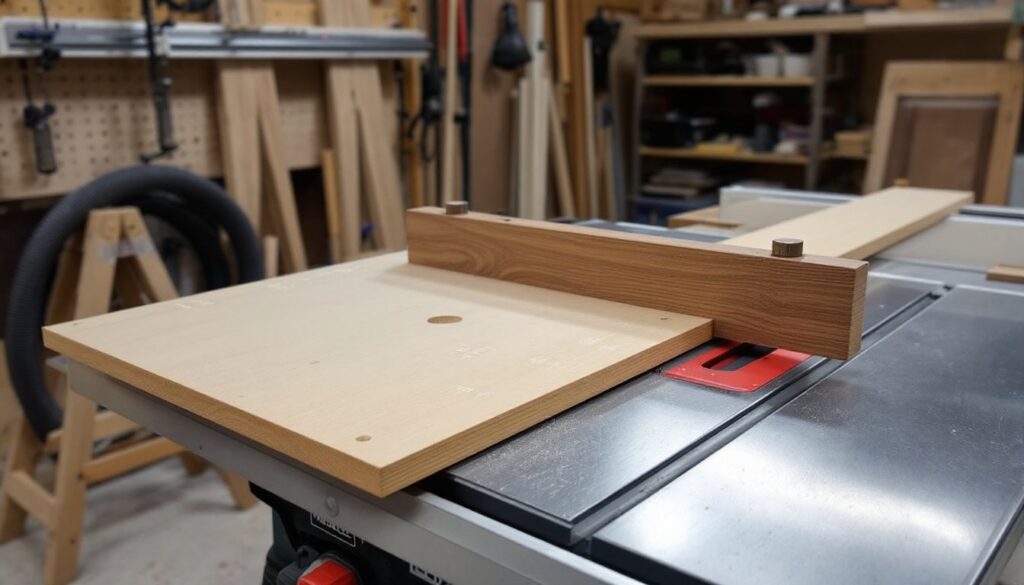
A table saw sled is a wooden platform that rides on hardwood runner rails fitted into the table saw’s miter gauge slots. Instead of pushing a workpiece into the blade by hand, the sled holds it securely and slides the entire assembly forward. This setup does three critical things: it keeps hands farther from the blade, ensures perpendicular (or angled) cuts without drift, and allows repeatable cuts on identical pieces.
Think of it as a bridge between the miter gauge (which works fine for light cuts) and a full sliding table system (expensive and space-hogging). A sled handles medium and heavy crosscutting, panel ripping with a fence, angle cuts without slipping, and repetitive production work where accuracy matters. Many DIYers find they stop reaching for the miter gauge entirely once a sled is on the saw. Safety improves because hands stay on the sled handle, not near the blade. Accuracy improves because the sled’s solid base eliminates wobble and drift. For anyone building face-frame cabinets, shelving, or furniture that demands square joints, a sled pays for itself on the first project.
Essential Materials And Tools Required
Materials (all readily available at big-box retailers or specialty woodworking suppliers):
- Two hardwood runners, ¾” × ¾” × length of saw table plus a few inches (hard maple or oak: measure your table first)
- One sheet of ¾” plywood (cabinet-grade, both sides reasonably flat)
- One sheet of ¼” plywood or hardboard for the fence face
- ¾” thick hardwood for the front and rear cross-members and handles
- Lag bolts and washers (½” × 3″) for securing the front handle
- Deck screws (2½” and 1¼”)
- Wood glue (exterior-grade, for durability in a dusty shop)
- Sandpaper (120- and 150-grit)
Tools needed:
- Table saw or miter saw (to rip runners and cross-members)
- Circular saw or miter saw (for crosscutting plywood)
- Drill/driver with bits and countersink
- Clamps (at least four bar clamps, 36″ or longer)
- A straightedge and pencil
- A speed square or combination square
- Router with a ⅛” roundover bit (optional but nice for edge detail)
Total cost for materials usually runs $80–120 depending on lumber grades and local market prices. Skip the fancy finishes: this tool works best with simple, durable construction.
Step-By-Step Construction Guide
Building The Base And Rails
Start by measuring the miter gauge slots on the saw table from front to back. The runners must be slightly taller than the slot depth, typically ¾” × ¾” hardwood fits standard ¾” deep slots with minimal side play. Cut the runners a few inches longer than the table depth so they can be trimmed to exact length after assembly.
Rip the plywood base to about 18–24″ wide and as long as the table. Use a straightedge to check that both the base and runners are flat: warped stock ruins precision. Rout or sand the bottom of the runners smooth to prevent binding.
Lay the base upside down on sawhorses. Position the runners so they’re parallel and equidistant from each edge (typically 2–3″ inboard). Use a speed square to ensure they’re perpendicular to the front and rear edges. Clamp the runners flush to the underside of the base with at least four bar clamps. Pre-drill and drive 2½” deck screws every 6–8 inches along each runner, using a countersink bit to recess the screw heads. Glue each screw hole and drive a wooden plug or fill with epoxy for a cleaner look (not essential, but it looks intentional).
Flip the sled upright and test-fit it on the saw table. It should slide smoothly with zero binding and no side-to-side rock. If it binds, sand the runners lightly or shim them with felt washers. Proper fit is non-negotiable, any slop compromises accuracy.
Installing The Fence And Stop Blocks
The fence is a critical piece. Attach a straight edge of ¼” hardboard or plywood to the rear cross-member of the sled, oriented 90 degrees to the blade’s path. Use a combination square to verify that the fence is perpendicular to the sled’s direction of travel. Clamp it, then drive 1¼” screws every 4–6 inches and glue-and-plug the heads.
For adjustable stop blocks, create two or three hardwood blocks (2″ × 3″ × 4″) that can slide along the fence and be locked in place with a simple handle and carriage bolt. Drill a ½” hole through each block and the fence at an offset angle, then add a carriage bolt with a wing nut. This lets the user slide the block to a marked distance and lock it without tools.
Alternatively, use a router or table saw to cut a ¼” deep × ½” wide slot along the fence, and glue rectangular stops into the slot at chosen positions. Simpler and permanent, though less flexible for custom lengths. Mark common stop distances (12″, 16″, 24″) with paint pen or router-burned lines on the fence so users can reset stops quickly.
Safety Tips And Best Practices
A sled is safer than freehand cuts, but careless use still risks injury. Always wear safety glasses and hearing protection: sawdust and blade noise are constants. Wear dust extraction/mask if the saw isn’t hooked to a shop vacuum. Nitrile or leather gloves protect hands but never wear long sleeves that can snag.
Keep both hands on the sled handle or the workpiece, never reach across the blade or into its path while the saw is running. Let the blade stop fully before removing a cut piece. If the wood binds or chatters, kill the power immediately and wait for complete stop before touching anything. A featherboard clamped to the fence prevents kickback on ripping operations.
Maintain the sled by keeping the runners clean and dry. Sawdust buildup causes binding. Sand the runners lightly every few months if they see heavy use. Check that fasteners stay tight: vibration loosens things over time. If the sled starts binding or the fence drifts out of square, disassemble, sand the runners, and reassemble before continuing.
Common Mistakes To Avoid
Skipping runner sizing: Using undersized runners that fit too loosely in the slots will cause drift and inaccuracy. Measure the slots and size runners accordingly. A loose fit is worse than a tight one.
Building on a warped base: Plywood that’s bowed or cupped will flex during cuts, undermining the whole purpose. Always check flatness with a straightedge before assembly. If the base is slightly warped after glue-up, shim it in the middle or redo it, precision tools demand flat foundations.
Not squaring the fence properly: Use a good square and a test cut to verify the fence is truly 90 degrees to the sled’s travel. A fence that’s off by even 2 degrees will produce gaps in joints and frustration on every crosscut.
Underestimating clamp strength during assembly: Bar clamps hold parts in place while glue sets. Use four minimum, spaced evenly. Under-clamping can cause joints to creep open, creating weak spots or internal voids.
Ignoring the handle position: Handles that are too low or placed awkwardly force the operator into an unsafe grip. Position the handle at waist height and test it with a few cuts before finalizing fasteners.
Using soft wood or low-grade plywood: Hardwood runners and cabinet-grade plywood cost a few dollars more but resist wear and stay flat for years. Cheap plywood sags and splinters: soft wood crushes in the miter slots.