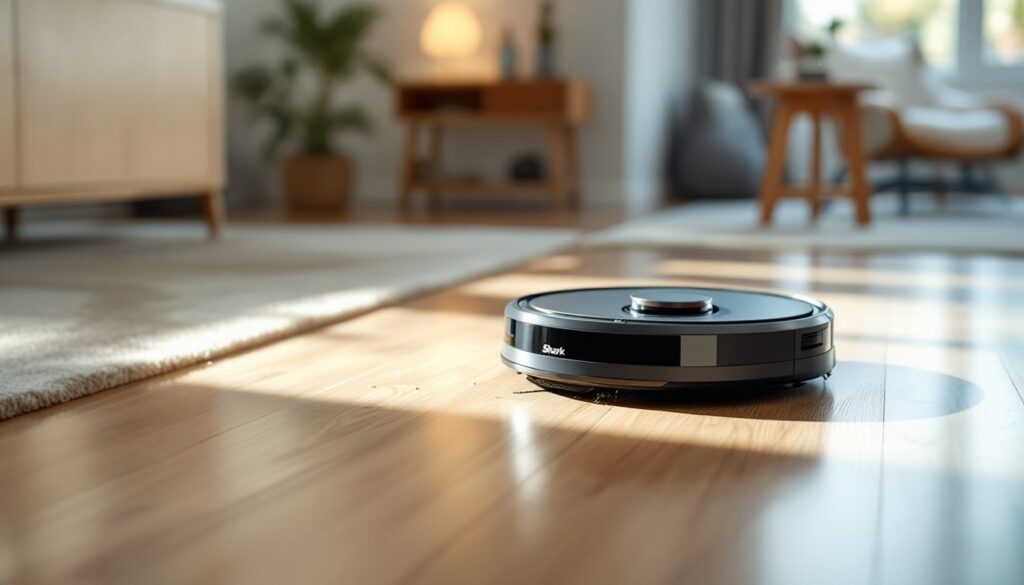
Anyone who’s spent hours pushing a traditional vacuum knows the appeal of putting that chore on autopilot. Shark robot vacuums have evolved far beyond the early gimmicks, they’re now a legitimate alternative for busy households. With advances in navigation, suction power, and smartphone integration, Shark’s lineup offers something for different home layouts and budgets. Whether you’re managing pet hair, hardwood floors, or wall-to-wall carpet, there’s a Shark robot vacuum engineered to handle it. This guide walks through what these machines actually do, how they compare to competitors, and whether one makes sense for your space.
Table of Contents
ToggleKey Takeaways
- Shark robot vacuums excel at daily maintenance cleaning on hard floors and low-pile carpet, delivering 1000–2500 Pa of suction power, though they’re not replacements for upright vacuums on deep carpet or heavy pet cleanup.
- Modern Shark robot vacuum models feature LiDAR mapping and Wi-Fi connectivity, allowing you to schedule cleanings remotely, set no-go zones, and integrate with smart home systems like Alexa.
- Regular maintenance is essential: clean roller brushes weekly, replace filters every 3–4 months, and wipe wheel contacts monthly to ensure optimal performance and extend the vacuum’s 3–5 year lifespan.
- Shark’s 2026 lineup ranges from budget-friendly entry-level models (~$200–300) to premium self-emptying units ($600–$1000) with dual mopping capability, so you can choose based on home size and feature needs.
- Pet owners should expect to empty dust bins 2–3 times weekly with heavy shedding and perform brush detangling every 1–2 weeks, as the rubber roller design on Shark models reduces hair buildup compared to bristle alternatives.
What Makes Shark Robot Vacuums Stand Out
Key Features That Define Performance
Shark robot vacuums compete on a few core metrics: suction strength (measured in Pascal, or Pa), runtime, and dust capacity. Most Shark models deliver between 1000–2500 Pa of suction, enough for pet hair and crumbs on tile, though not as aggressive as full-sized upright vacuums for deep carpet cleaning. The rubber roller brush found on many Shark models works better than bristles alone on pet hair: it grabs without tangling.
Runtime varies between models. Budget units run 60 minutes per charge, while premium models stretch to 120+ minutes before returning to dock. On a typical single story, 60–90 minutes covers most floor plans. Dust bins range from 0.5 to 0.75 liters, small compared to upright cans, but sufficient between dumps for apartment or mid-sized homes. Larger households with pets should expect to empty more frequently.
Battery type matters for longevity. Shark uses lithium-ion cells (more durable, faster charging) in newer models, while older units may have NiMH batteries (lower cost, less lifespan). Lithium systems retain charge better over years, typically lasting 2–3 years before degradation becomes noticeable.
Shark offers different wheel and brush setups for different surfaces. Models with side brushes sweep debris toward the main roller, useful on tile corners where a central brush won’t reach. Multi-surface models have adjustable height to handle transitions between hardwood and carpet without bogging down. Entry-level units often skip this and work best on single-surface homes.
Smart Navigation and Mapping Technology
Older robot vacuums bounced around like pinballs: Shark’s modern models use structured navigation to clean methodically. Most rely on LiDAR mapping (light-based sensors that build a room layout in real-time) or gyroscope-aided dead reckoning. LiDAR is more accurate and faster, cutting cleaning time compared to random-path systems. It allows the vacuum to chart obstacles, avoid stairs, and skip no-go zones you define via app.
The Shark app (iOS/Android) connects via Wi-Fi and lets you start, stop, or schedule cleanings remotely, helpful if you want the vacuum working while you’re out. You can draw digital no-go zones around pet bowls or kids’ toy areas, and some models send progress updates. Integration with Alexa or Google Home means voice commands work too (“Alexa, tell Shark to start cleaning”).
One caveat: mapping speed and accuracy depend on room layout and lighting. Dark surfaces confuse some sensors slightly: reflective surfaces (shiny tile, mirrors) can briefly throw off measurements. For most homes, this isn’t a showstopper, but open-concept floor plans with multiple levels connected by stairs require careful boundary-setting to prevent falls.
Shark’s self-emptying models automatically dump their dust bin into a base station after each run, useful if you hate touching dirt, though this adds cost ($150–$300 premium) and takes up more charging-dock footprint. Non-self-emptying models cost less upfront but require manual bin clearing weekly or bi-weekly depending on pet hair volume.
Real-World Performance and Cleaning Power
In practice, Shark robot vacuums excel at maintenance cleaning, daily sweeps that keep dust, crumbs, and light pet hair in check. On hard floors and low-pile carpet, most models perform well. High-pile or shag carpet presents a challenge: the vacuum can get stuck or spend excess time in one spot, reducing coverage area per charge.
Pet owners should know that shedding frequency matters. A single dog that sheds moderately? A Shark handles it weekly without fuss. Multiple pets or heavy shedding? You’re emptying the bin 2–3 times weekly, and brush maintenance (removing hair tangles every 1–2 weeks) becomes routine. The rubber roller design on Shark models sheds less hair buildup than bristle brushes, but it’s not tangle-free.
Cleaning patterns vary by model. Budget Shark units use random or spiral patterns: mid-range and premium models use systematic grid mapping, making fewer redundant passes and cleaning faster. For a 1,000–1,500 sq. ft. home, expect 60–90 minutes of active cleaning time. Larger homes (2,000+ sq. ft.) may need two cleaning cycles per day or skip using a robot as the primary vacuum.
Hardwood and tile benefit most. Suction on these surfaces is effective, and the vacuum won’t get bogged down in fiber depth. Transitions between floor types work if the height difference is modest (under 0.5 inches). Thick area rugs can trap the vacuum: it’s best to either secure them or set no-go zones. Mats at entryways should be low-pile or secured, as high edges can tip smaller units.
Comparing Top Shark Robot Models
Shark’s 2026 lineup spans entry to premium. The Shark EZ Robot (or current equivalent) emphasizes simplicity: no Wi-Fi, manual scheduling, around $200–300. It cleans adequately on flat layouts with few obstacles. The Shark IQ brings Wi-Fi, app control, and room mapping at $400–$500. It’s the sweet spot for most owners: smart features without flagship pricing.
The Shark Matrix or higher-tier self-emptying models ($600–$1000) add auto-dock emptying, stronger suction, longer runtime, and Alexa compatibility. These suit larger homes or allergy-conscious owners who prefer hands-off maintenance. Top models also include mopping capability (wet pad attachment) for dual-surface cleaning, though performance on hardwood depends on the pad texture, avoid soaking, as water can damage wood.
Key differences:
- Suction Power: Budget models ~1000 Pa: premium ~2000+ Pa.
- Runtime: 60–120 minutes depending on suction setting and model.
- Navigation: Random path (budget) to LiDAR mapping (premium).
- Self-emptying: Premium feature: budget models skip it.
- Mopping: Mid-range and up: water tanks are small (300 mL), so coverage is light.
Maintenance and Longevity
Robot vacuums aren’t set-and-forget. Brush maintenance is essential: check the roller weekly for hair tangles and clean every 1–2 weeks (manual removal or wash, depending on design). Filters need replacement every 3–4 months on high-use machines, more often with pets. HEPA filters cost $20–$40 per replacement and extend allergen filtration if that’s important to you.
Wheel condition also matters. Pet hair and dust wrap around wheels over months, reducing traction and cleaning efficiency. A quick monthly wipe keeps them rolling smoothly. Dock contacts (where the vacuum charges) can corrode: wipe them dry if the dock sits in a damp area.
Battery longevity depends on charge cycles and heat. Keeping the dock in a cool, dry location away from direct sun extends battery life. Most lithium-ion batteries degrade noticeably after 2–3 years, at which point you’ll notice reduced runtime. Replacement batteries run $100–$200 but are often easier than replacing the whole unit. Real-world lifespan is typically 3–5 years before performance drops enough to justify replacement.
Conclusion
Shark robot vacuums deliver genuine value for households that match their strengths: flat layouts, moderate pet hair, and owners who want daily maintenance on autopilot without deep-clean capability. They’re not replacements for upright vacuums on high-pile carpet or for intensive pet cleanup, but as a complement to your cleaning routine, they earn their place. Choose based on your home size, Wi-Fi needs, and budget, entry-level models work fine for small spaces, while larger homes or allergy concerns justify mid-range or premium picks. Expect regular brush maintenance and filter replacements, and your Shark will keep floors consistently clean for years.