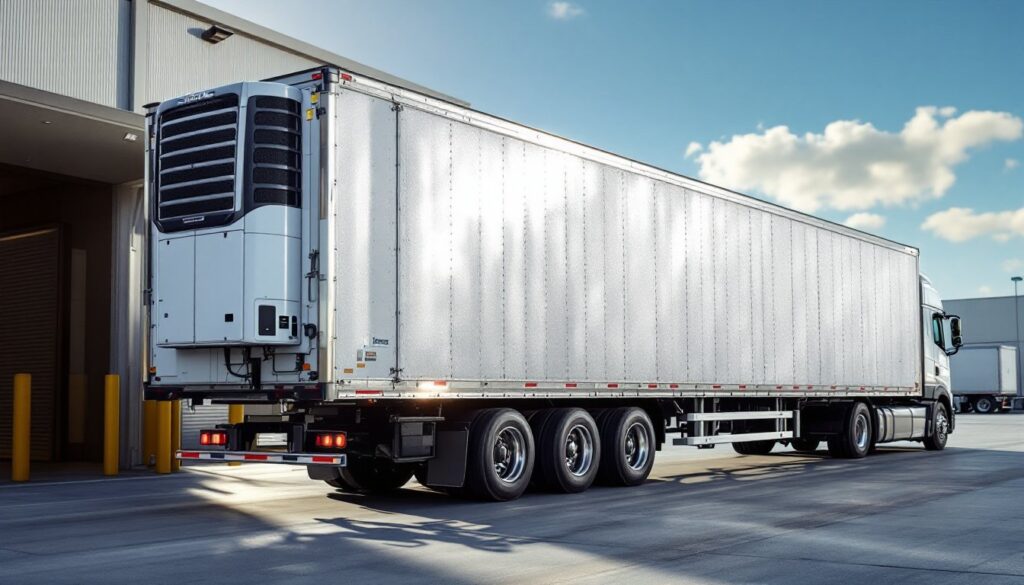
A refrigerated trailer, or “reefer”, is one of the most critical tools in cold-chain logistics. Whether hauling frozen food, pharmaceuticals, or fresh produce across state lines, a semi truck refrigerator keeps perishables safe and marketable. In 2026, operators face tough choices: standby diesel units, all-electric systems, or hybrid rigs. Each option carries different upfront costs, compliance requirements, and operational demands. This guide walks owners and fleet managers through the essentials of semi truck refrigeration so they can make informed decisions for their operation.
Table of Contents
ToggleKey Takeaways
- A semi truck refrigerator maintains precise temperature control during transport and stationary periods, preventing spoilage and ensuring regulatory compliance with USDA, FDA, and state health department standards.
- Diesel-powered units offer proven reliability and nationwide fuel availability at $15,000–$25,000 upfront, but consume 1–1.5 gallons daily in idle conditions and face increasing urban anti-idling restrictions.
- Electric and hybrid refrigeration systems reduce fuel costs by up to 40% and lower emissions, though they require $35,000–$60,000 initial investment and dependable charging infrastructure access.
- Match cooling capacity (30,000–40,000 BTU/h for typical 53-foot trailers) and insulation R-values (12–20) to your specific routes and cargo to optimize efficiency and prevent compressor strain.
- Preventive maintenance—including quarterly condenser cleaning for diesel units and battery monitoring for electric systems—is critical; neglected upkeep leads to costly repairs ($3,000–$8,000+) and cargo loss.
- Over a 10-year lifecycle, electric or hybrid rigs deliver lower total operating costs ($2–4/day fuel vs. $8–12 for diesel), making them increasingly competitive as emissions regulations tighten nationwide.
What Is A Semi Truck Refrigerator And Why It Matters
A semi truck refrigerator, commonly called a reefer unit, is a self-contained or stand-alone cooling system mounted on a trailer chassis. It maintains precise temperature ranges, typically between 35°F and -20°F depending on cargo, during transport and stationary periods.
Unlike in-cabin air conditioning, a truck refrigerator runs independently, powered by its own engine, electric battery, or hybrid system. This separation is crucial: it prevents engine shutdown from degrading cargo and allows operators to maintain temperature while loading, unloading, or during mandatory rest stops.
Why does this matter? Spoilage costs money. A load of fresh fish or insulin destabilized by temperature swings gets rejected at the dock, costing hundreds or thousands per trip. Beyond financial impact, temperature failure can pose food safety and regulatory violations. The USDA, FDA, and state health departments enforce strict temperature logs and documentation. Having a reliable refrigerator isn’t just smart business, it’s a legal requirement for most perishable freight.
Key Types Of Refrigerated Trailers Available Today
Standby And Diesel-Powered Units
Diesel-powered standby refrigerators are the industry workhorse. A small auxiliary diesel engine, separate from the main truck engine, powers a compressor that cycles refrigerant through the trailer’s coils. Popular units include Thermo King, Carrier, and Wabash models rated from 35–60 hp.
These systems excel in predictability. Operators refuel at truck stops, and diesel is widely available nationwide. Maintenance is straightforward, tune-ups, oil changes, and occasional compressor servicing follow a known schedule. Total upfront cost typically ranges from $15,000 to $25,000 for a quality used unit: new units can exceed $40,000.
The trade-off: diesel rigs burn fuel constantly, especially in idle conditions. A standby unit running 24/7 consumes roughly 1–1.5 gallons per day depending on ambient temperature and trailer insulation. Over a year, that’s significant overhead. They’re also louder and emit exhaust, increasingly problematic in urban loading zones with anti-idling ordinances.
Electric And Hybrid Systems
Electric refrigerators eliminate the auxiliary engine entirely. Units powered by lithium-ion batteries or grid plug-in shore power are gaining traction. Charging at a dock or using overnight grid power reduces operational noise and emissions.
Hybrid systems pair a small diesel engine with battery assist, cutting fuel consumption by up to 40%. They automatically switch to electric power during idle periods and diesel during highway cruising when extra compressor load is highest.
The appeal is obvious: lower fuel costs and regulatory compliance with emissions standards (CARB in California, similar rules spreading nationally). But, upfront costs are steep, $35,000 to $60,000 for quality electric or hybrid units. Battery replacement every 5–8 years adds another $8,000–$12,000. These systems also require reliable access to charging infrastructure, which remains patchy outside major metro areas.
Critical Features And Specifications To Consider
Insulation and R-value directly affect cooling efficiency. Modern trailers use 6–8 inches of foam or polyurethane, achieving R-values between 12 and 20. Better insulation means the compressor works less, saving fuel. Check seals around doors and corners, cracks cost efficiency fast.
Cooling capacity is rated in BTU (British Thermal Units) per hour. A typical 53-foot trailer needs 30,000–40,000 BTU/h to maintain -20°F in 95°F ambient. Undersized units struggle: oversized units cycle too much, wasting fuel and wearing parts early. Match capacity to typical routes and cargo types.
Temperature control technology ranges from simple mechanical thermostats to modern digital systems with alarm alerts and GPS remote monitoring. Smart systems cost more upfront but enable proactive maintenance and real-time cargo verification, valuable for pharmaceutical and food transport where regulatory audits are routine.
Door design matters. Swing doors are standard but freeze-prone during unloading in cold climates. Roll-up or roll-through doors reduce exposure time and air leakage. Some operators prefer passive roll-through with thermal flaps for efficiency, especially high-volume operations.
Trailer construction (aluminum vs. steel walls) affects weight and corrosion resistance. Aluminum is lighter (better fuel economy) but pricier: steel is cheaper upfront but corrodes in coastal or salt-treated environments.
Read manufacturer specs closely. A unit claiming -30°F performance assumes standard insulation and mild ambient. In 110°F Death Valley heat, that same unit might only reach -15°F.
Maintenance, Compliance, And Operating Costs
Preventive maintenance is non-negotiable. Diesel units need oil and filter changes every 500–1,000 operating hours, condenser coil cleaning quarterly, and refrigerant checks annually. Neglect a condenser clogged with road debris, and compressor failure follows, a $3,000–$8,000 repair.
Electric and hybrid systems require battery health monitoring and electrical connector inspection. Corrosion at shore power connections is common and catches operators off guard during critical shipments.
Regulatory compliance varies by jurisdiction. The EPA enforces refrigerant phaseouts, older R-502 systems are grandfathered but increasingly restricted. Modern units use R-404A or R-448A, more environmentally friendly but slightly costlier to service. Some states (California leading) mandate equipment logs and emissions reporting. Drivers must maintain temperature records, digital data loggers are standard and inexpensive.
Permitting depends on operation type. Local delivery routes may trigger anti-idling restrictions: cross-country hauls typically face fewer local rules but must comply with federal DOT regulations. A permit violation can run $1,000–$5,000 per infraction.
Real operating costs break down roughly as follows:
- Fuel: Diesel units, ~$8–12/day: electric units, ~$2–4/day (grid charging)
- Maintenance: ~$0.015–0.025 per mile for diesel: ~$0.01 per mile for electric
- Repairs/replacement: Budget 10% of purchase price annually
- Permits/compliance: Highly variable: assume $500–2,000/year
Total lifecycle cost (10 years) favors electric or hybrid in high-mileage operations, but diesel remains competitive for small fleets or infrequent users.
Conclusion
Choosing a semi truck refrigerator isn’t just about buying cold air. It’s a long-term decision affecting fuel budgets, regulatory compliance, cargo safety, and resale value. Diesel standby units remain reliable and affordable for traditional operations: electric and hybrid systems are gaining momentum as emissions rules tighten and charging infrastructure expands. The right choice depends on fleet size, typical cargo, route geography, and budget horizon. Operators who invest in quality insulation, proper sizing, and routine maintenance protect their freight, and their bottom line.