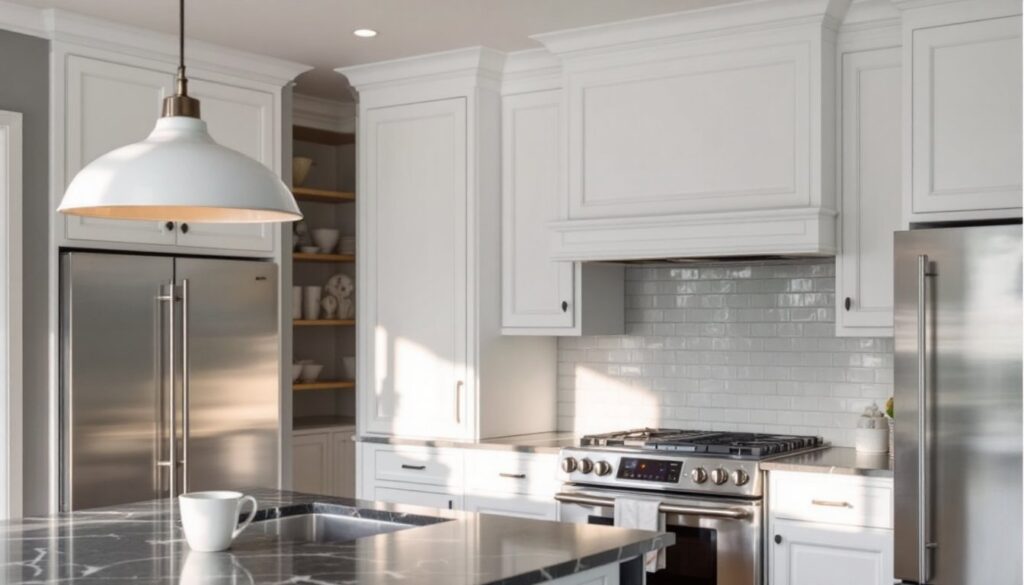
Crown molding transforms kitchen cabinets from functional storage into a polished focal point. Whether the kitchen features sleek modern lines or classic cherry cabinetry, the right crown molding profile ties the design together while adding visual height and sophistication. But with dozens of profiles available, from delicate dentil patterns to simple flat stock, choosing the right one can feel overwhelming. Understanding the differences between classic ornate styles, contemporary minimalist options, and material choices helps homeowners make informed decisions that complement both their cabinets and overall kitchen aesthetic. The good news: installation is straightforward for anyone comfortable with a miter saw and basic carpentry.
Table of Contents
ToggleKey Takeaways
- Crown molding for kitchen cabinets bridges aesthetics and function by hiding gaps, preventing dust accumulation, and creating a polished, intentional look that makes ceilings appear higher.
- Classic ornate profiles like dentil and carved crown molding suit traditional cabinetry in cherry or maple, while modern minimalist options—cove molding, flat-stock, and beveled edges—complement contemporary slab-door designs.
- Material selection depends on kitchen humidity: solid wood works best in dry kitchens, while MDF, polyurethane, and engineered options resist moisture and warping near dishwashers and prep areas.
- DIY installation is achievable with a miter saw and basic carpentry skills, though precise miter cuts at corners are critical—even a degree off creates visible gaps.
- Crown molding heights typically range from 2.5 to 5 inches, with costs varying from $2–$15 per linear foot depending on material and profile complexity.
What Is Cabinet Crown Molding and Why It Matters
Crown molding is a decorative trim that caps the top of kitchen cabinets, bridging the gap between cabinetry and the ceiling. Beyond aesthetics, it serves practical purposes: it hides gaps, prevents dust accumulation, and creates a finished, intentional look. Crown molding also draws the eye upward, making ceilings feel higher and kitchens appear more spacious.
The profile, the cross-sectional shape of the molding, defines how light plays across the surface and how formal or casual the kitchen feels. A simple, flat profile reads modern and minimalist: an ornate profile with carved details conveys traditional elegance. Most kitchen crown molding ranges from 2.5 to 5 inches tall (measured on the wall side), though options exist on both ends of that spectrum.
Proper installation matters. Crown molding is typically attached directly to the cabinet frame (or to blocking screwed to the wall behind the cabinets) using finish nails, a brad nailer, or pocket-hole screws. The cut angles, called miter cuts, must be precise: even a degree or two off creates visible gaps at corners. This is where a quality miter saw becomes invaluable.
Classic Styles: Traditional and Ornate Profiles
Classic crown molding profiles evoke formal dining rooms and established homes. These styles work beautifully with traditional cabinetry finishes like cherry, maple, or walnut with raised-panel doors. They also pair well with painted cabinets in white, cream, or soft gray.
Dentil and Carved Crown Molding
Dentil molding features a series of small, evenly spaced blocks (called dentils) running along the lower edge, creating a rhythmic, almost architectural detail. It’s refined without being overly ornate and works across time periods. Many homeowners find dentil molding strikes the right balance between traditional charm and contemporary kitchens.
Carved crown molding includes deeper relief patterns, scrollwork, floral motifs, or egg-and-dart details. These require more skilled installation because the curves and depth demand careful handling and strategic fastening (usually at thicker, more stable sections). Carved profiles are most at home in formal kitchens with matching cabinetry details, island bases, or range hoods.
Ornate profiles demand quality material. Cheap, thin versions look flimsy and don’t take stain or paint evenly. Expect solid wood ornate molding to cost $8–$15 per linear foot, depending on species and detail complexity. Stock profiles in pine run cheaper: premium hardwoods cost more. Composite versions (discussed below) offer a middle ground: they mimic carved detail convincingly while resisting moisture and warping.
Modern and Minimalist Options
Modern kitchens often skip crown molding altogether, but those that include it favor clean, geometric profiles. These styles suit flat-panel or slab-door cabinetry, open shelving, or two-tone cabinet schemes.
Clean Lines and Contemporary Designs
Simple cove molding is a gentle, rounded curve with no relief or detail. It’s subtle, affordable, and complements glossy white cabinets, natural wood, or matte black finishes without competing for visual attention. A 2.5-inch cove molding reads contemporary without feeling sparse.
Flat-stock molding (also called band molding or just trim) is literally a flat board, sometimes with a subtle routed edge. It pairs beautifully with industrial kitchens, minimalist design, and modern cabinetry. A 1-inch or 1.5-inch thick flat board in walnut or painted white can anchor the visual weight of tall cabinets reaching the ceiling.
Crown molding with a beveled or chamfered edge splits the difference: it’s more interesting than flat stock but cleaner than carved profiles. The angled edge catches light and adds dimension without ornate detail. These often measure 3–4 inches tall and cost $3–$8 per linear foot.
Modern profiles are usually easiest to install because fewer curves mean fewer fastening challenges and less cutting precision required. A beginner-friendly kitchen might use simple cove molding with butt joints (square-cut ends) instead of miters, which eliminates the trickiest cuts. This approach is gaining traction in contemporary design.
Materials: Wood, Composite, and Beyond
Material choice affects durability, appearance, cost, and installation approach.
Solid wood (pine, oak, maple, cherry, walnut) is traditional and stainable. It absorbs moisture near sinks and dishwashers, so sand-sealing or finishing is essential to prevent cupping or warping. Real wood costs more upfront but takes stain beautifully. It’s best for kitchens with lower humidity or where sealed surfaces are maintained.
Engineered wood or plywood uses a veneer over a stable core. It’s more affordable than solid hardwood, resists warping, and takes stain or paint well. Quality engineered molding feels substantial and looks nearly identical to solid wood when finished.
Medium-density fiberboard (MDF) is dense, paintable, and extremely stable. It doesn’t warp or swell and is ideal for painted cabinets in high-moisture kitchens. MDF machines cleanly for ornate profiles, making it popular for carved designs. Drawback: it’s not stainable and shows damage if bumped. Cost runs $2–$6 per linear foot, among the cheapest options.
Polyurethane molding is foam-based and incredibly lightweight, making it easy to install. It resists moisture, won’t warp, and takes paint or stain beautifully. High-end polyurethane profiles mimic hand-carved detail convincingly. It’s ideal for tall ceilings where weight matters or over open cabinetry. Cost: $4–$10 per linear foot.
Marble, granite, or solid surface molding is rare but appears in high-end kitchens. Installation requires professional help: typically involves clips or epoxy adhesive rather than nails.
Key material considerations: Kitchen humidity dictates material choice more than aesthetics. Kitchens near dishwashers, islands with active prep areas, or in humid climates benefit from MDF, polyurethane, or engineered options over solid wood. For dry kitchens or formal, traditional designs, solid hardwood or quality engineered stock is the standard.
Conclusion
Crown molding is one of the highest-impact finishing touches for kitchen cabinets, elevating the entire room with thoughtful design. Classic ornate profiles suit traditional kitchens: modern, clean-lined options complement contemporary spaces. Material choice, wood, composite, MDF, or polyurethane, depends on kitchen conditions, budget, and aesthetic goals. Most homeowners can install crown molding themselves with a miter saw, a level, finish nails, and patience on the cuts. Take time to choose a profile that reflects the kitchen’s style and materials, plan cuts carefully, and the result will look intentional and polished for years to come.