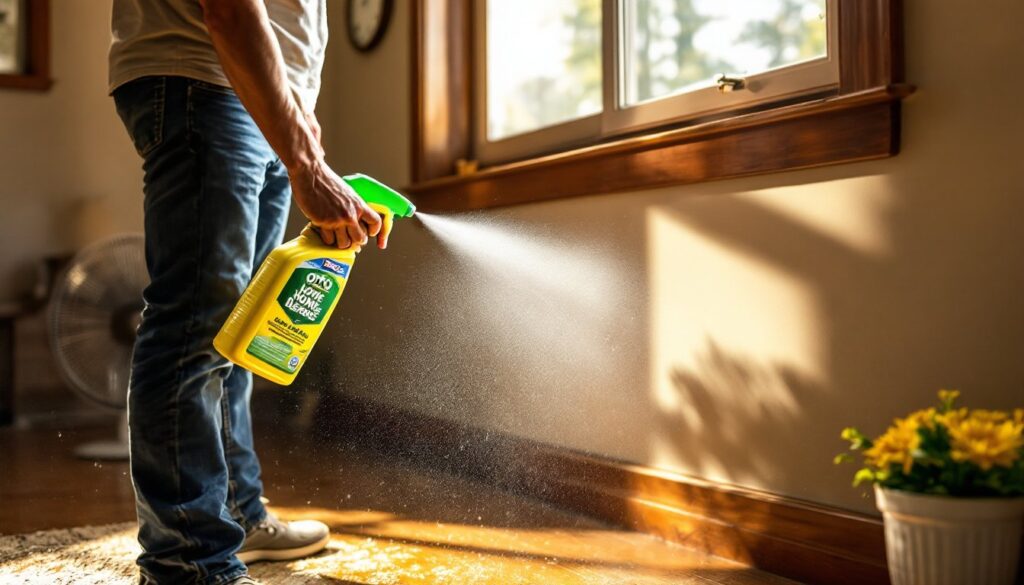
Anyone who’s applied Ortho Home Defense knows the anticipation: the spray’s down, but when can you safely walk across treated surfaces without worrying about the residue? Knowing how long for Ortho Home Defense to dry isn’t just about convenience, it affects how effectively the product works and whether pets or family members can safely re-enter treated areas. This guide breaks down the actual drying timeline, the variables that speed it up or slow it down, and what “dry” really means for this perimeter insecticide. Whether treating baseboards, window frames, or the foundation perimeter, understanding drying times helps homeowners apply the treatment strategically and get reliable pest control results.
Table of Contents
ToggleKey Takeaways
- Ortho Home Defense dries to the touch in 2 to 4 hours, but full curing and maximum effectiveness require a complete 24-hour drying period for safe re-entry and reliable pest control.
- Temperature is the primary factor affecting drying speed—warm conditions between 70°F and 85°F are ideal, while temperatures below 60°F can extend drying time to 6-8 hours.
- High humidity (above 80%) and heavy application slow drying significantly; apply a light, even mist until surfaces glisten slightly rather than saturating them.
- Improve drying speed by ensuring airflow with a box fan, clearing the treated area of clutter, and treating early in the day when temperatures are rising and humidity is lower.
- Avoid re-entering treated spaces or resuming normal activity during the critical first 24 hours, as the active ingredients are still migrating into cracks and porous surfaces for maximum residual effectiveness.
- Porous surfaces like concrete and untreated wood absorb the product faster than non-porous surfaces, but surface dryness doesn’t indicate full penetration into substrate and capillaries.
Understanding Ortho Home Defense Drying Times
Initial Surface Drying vs. Full Cure Time
Ortho Home Defense dries to the touch in approximately 2 to 4 hours under typical indoor conditions. This is the “surface dry” point, the liquid sheen vanishes and the treated surface feels dry when you run your hand over it. But, surface-dry and fully dry are not the same thing.
Full curing takes considerably longer. The product reaches its maximum residual effectiveness and becomes completely safe for regular contact, including for children and pets, after 24 hours. This 24-hour window is the industry standard for perimeter treatments because it allows the active ingredients (bifenthrin and zeta-cypermethrin in Home Defense) to set into cracks, gaps, and porous surfaces like concrete and wood.
The distinction matters in practice. A homeowner might see the spray dry in a couple hours and assume it’s safe to let kids or pets back in the treated space. In reality, the active ingredients are still migrating into the substrate. Disturbing the surface, sweeping, or allowing pets to paw at baseboards during this window can reduce effectiveness and track the product to untreated areas.
Factors That Affect Drying Speed
Temperature and Humidity Impact
Temperature is the primary driver of drying speed. Ortho Home Defense dries fastest in warm, dry conditions, ideally between 70°F and 85°F. Cold temperatures slow evaporation significantly. If the temperature is below 60°F, drying time can stretch beyond 4 hours, sometimes to 6 or 8 hours. In winter or in unheated basements, plan for extended drying periods and ensure adequate airflow with a fan if possible.
Humidity works against you. High humidity (above 80%) traps moisture and delays evaporation. If treating a humid basement or during rain-heavy seasons, expect drying to take longer. Conversely, low humidity and gentle air circulation (open windows, a box fan in the corner) speed things along. Avoid treating on damp days or immediately before rain: if the product doesn’t have time to set, precipitation washes it away.
Application Method and Coverage
How thickly homeowners apply the spray directly affects drying time. A light, even mist dries faster than a heavy saturation. The product label recommends applying until surfaces glisten slightly, not until they’re dripping wet. Over-application not only wastes product but extends drying time and can create visible residue.
Surface type matters too. Porous materials like concrete, untreated wood, and brick absorb the liquid faster than non-porous surfaces like tile or painted drywall. Concrete baseboards or foundation treatments may appear dry on the surface within 2 hours, but the product is still being absorbed into the pores and capillaries. Non-porous surfaces (like glazed tile) dry faster to the touch but may still hold product on the surface longer, making them slippery initially.
Indoor spaces typically dry faster than outdoors because they’re sheltered from temperature swings and precipitation. Treating interior baseboards and wall voids is generally faster and more reliable than exterior perimeter treatments, where weather variables play a bigger role.
Best Practices for Faster Drying
Prepare before spraying. Clear the area of clutter, toys, and pet beds. Close interior doors to treated spaces and keep everyone out during drying. This isn’t just about safety, air circulation improves drying speed, and keeping people out prevents foot traffic that can disturb the product.
Improve airflow strategically. In still indoor air, set a box fan to point toward treated baseboards or walls. Don’t blow directly at the spray, instead, position the fan to create gentle cross-ventilation. In basements or crawlspaces, a small oscillating fan running during and after application makes a measurable difference. Avoid strong air currents that could blow the fine mist around, though.
Time applications wisely. Treat early in the day when temperatures are rising and humidity is typically lower. Avoid treating in the evening if the space isn’t climate-controlled, as temperatures drop overnight and slow evaporation. In humid climates, treat during drier parts of the year or during the driest part of the day.
Check surface conditions first. Wipe down dusty or grimy baseboards and corners before spraying. Dust physically blocks the product from contacting the surface and can trap it on top, delaying effective penetration. A light vacuum of the baseboards or a damp cloth wipe (let it dry) ensures better contact and absorption.
Don’t re-enter prematurely. Even if the surface feels dry after 2 to 4 hours, wait the full 24 hours before resuming normal activity in heavily treated areas. This is especially important in homes with young children or pets. The longer the product sits undisturbed, the deeper it penetrates and the more durable the treatment becomes.
When to Expect Maximum Effectiveness
Ortho Home Defense reaches peak effectiveness after the full 24-hour cure period. This doesn’t mean it’s inactive before then, but the active ingredients haven’t fully migrated into cracks, crevices, and the substrate. After 24 hours, the treatment has bonded with treated surfaces and will deliver residual control for several months (the label typically claims up to 12 months in protected areas).
Re-entry timing depends on the treated area. Interior baseboards and wall voids can have occupants return once fully dry, but avoiding heavy foot traffic or furniture rearrangement for the first day is wise. For perimeter treatments around the foundation, outdoor areas, or in crawlspaces, maintaining that 24-hour separation is more critical because these spaces are less controlled and the product is vulnerable to weathering and disturbance.
If a homeowner needs to re-treat a specific spot or if application was incomplete, waiting at least 24 hours before applying more product ensures the first coat has set and won’t be disrupted. Over-applying or re-spraying too frequently doesn’t speed up control, it wastes product and can create visible residue that suggests improper application.